Sexual Trauma
Understaning Sexual Trauma
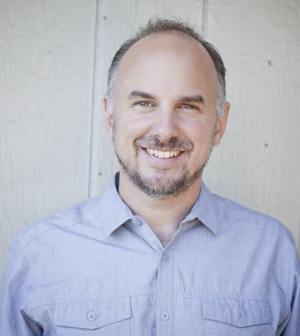
Tim Norton | Sex Therapy
Sexual trauma is not sex iteslf but an act of violence and control. Its effects are stored not only in memory, but in the body. The nervous system, designed to protect against threat, learns to brace, numb, or disconnect in order to survive. These protective adaptations can persist long after the event itself, shaping how a person experiences desire, arousal, trust, and touch.
From a neuroscience perspective, sexual trauma reflects a breakdown in the body’s integration systems those that link emotion, safety, and sensation. When trauma occurs, the limbic system floods with stress hormones, while the prefrontal regions that regulate awareness and language go offline. The result is fragmentation: the body remembers what the mind cannot fully process.
Over time, this may appear as hypersexuality using intensity or fantasy to regulate distress or hyposexuality, where desire shuts down completely as the body’s way of avoiding threat. Both are intelligent survival responses, not pathologies. They reflect a nervous system doing its best to stay safe in a world that once was not.
Tim Norton understands this not as damage, but as adaptation, he works with deep respect for the body’s wisdom while guiding clients toward restoration, rebuilding safety, choice, and connection at a pace the nervous system can tolerate.
A Neuroscience and Sex Therapy Perspective
Healing from sexual trauma is a process of re-integration. The goal is not to revisit the event, but to re-establish trust in the body’s signals to experience sensation and arousal as safe, rather than dangerous.
Tim integrates Somatic Experiencing, Internal Family Systems (IFS), Acceptance and Commitment Therapy (ACT), Dialectical Behaviour Therapy (DBT), psychodynamic therapy, and neuroscience-based regulation to gently reconnect mind and body. His approach is trauma-informed, non-invasive, and always led by the client’s readiness.
Therapy may include:
• Somatic grounding, developing awareness of posture, breath, and physical safety cues.
• Trauma mapping, identifying how protective responses (numbing, avoidance, over-activation) appear in intimacy.
• Arousal regulation, helping clients understand cycles of hyper- and hypo-sexuality as nervous-system patterns, not flaws.
• Boundary restoration, rebuilding agency over touch, timing, and consent.
• Attachment repair, creating experiences of safe closeness and emotional regulation.
• Sensory reintegration, re-introducing movement, music, journaling, or gentle mindfulness to reconnect pleasure and presence.
• Medical and somatic collaboration, involving physicians or pelvic floor specialists when needed to address physiological recovery.
Each session moves at the pace of safety, slow enough for trust to form, steady enough for healing to consolidate.
Restoring Embodiment and Erotic Integrity
Recovery from sexual trauma is aboutreclaiming the body as a place of safety again. As integration deepens, clients often describe subtle changes: the ability to stay present during intimacy, to breathe through sensation, to feel desire without panic.
Tim’s discreet, concierge-style practice provides an environment of profound respect and confidentiality for this work. His integrative, neuroscience-based method helps clients rebuild safety, intimacy, and vitality, supporting a movement from protection to presence, and from survival to wholeness.
Here, healing is defined by what becomes possible again: trust, connection, and aliveness.